
Periodontal Prosthesis vs. Interdisciplinary Therapy: Understanding the Difference
Not long ago I was at an event in New York where the lecturer was asked what was the difference between Periodontal Prosthesis and Interdisciplinary Dentistry. He quickly replied: “our philosophy”. He was right of course, as anyone who has witnessed the unique approach of the traditional Philadelphia-based Perio-Prosth trained clinicians can attest to. But I could tell from the audience’s reaction that a clearer explanation was necessary. Since then, I have been thinking about how I would respond to the same question, so here it is.
Modern dentistry has traditionally relied on interdisciplinary therapy to manage complex cases, with many specialists collaborating to address different aspects of patient care.
However, while they may appear similar on the surface, they represent fundamentally different philosophies of diagnosis, treatment planning, and clinical execution. Understanding this difference is essential because it directly impacts long-term biologic stability, functional durability, and esthetic success.
What Is Interdisciplinary Therapy?
Interdisciplinary therapy refers to the coordination of care among multiple dental specialists. Each discipline contributes its expertise to treat a specific component of the case. This model emphasizes collaboration and communication. Each specialist performs their role, and together they contribute to the overall outcome.
Interdisciplinary therapy represents an important advancement over isolated care. However, it remains fundamentally discipline-based. Each specialty evaluates the patient from its own perspective, and treatment often progresses sequentially through referrals.
While effective, this structure can sometimes result in treatment that is coordinated—but not fully integrated.
What Is Periodontal Prosthesis?
Periodontal Prosthesis represents a different and more comprehensive approach. It is not simply collaboration among specialists, but a unified biologic and biomechanical philosophy of care.
Rather than dividing treatment into separate disciplinary components, Periodontal Prosthesis begins with a comprehensive diagnosis that simultaneously considers:
Dentofacial, dentolabial and dentogingival esthetics
Periodontal health and tissue stability
Prosthetic design and restorative contours
Implant positioning relative to biology and function
Occlusal forces and load distribution
Long-term maintenance and risk management
In this approach, every decision is made with full awareness of its impact on the entire oral system. Every diagnosis is biological. Every restoration is biomechanical. Every treatment plan is systemic.
Implants are placed based on prosthetic and biologic requirements—not merely available bone. Restorations are designed to support tissue health—not simply replace missing tooth structure. Occlusion is engineered to protect both teeth and implants over time.
Periodontal Prosthesis treats the mouth not as a collection of separate parts, but as a single integrated biologic system.
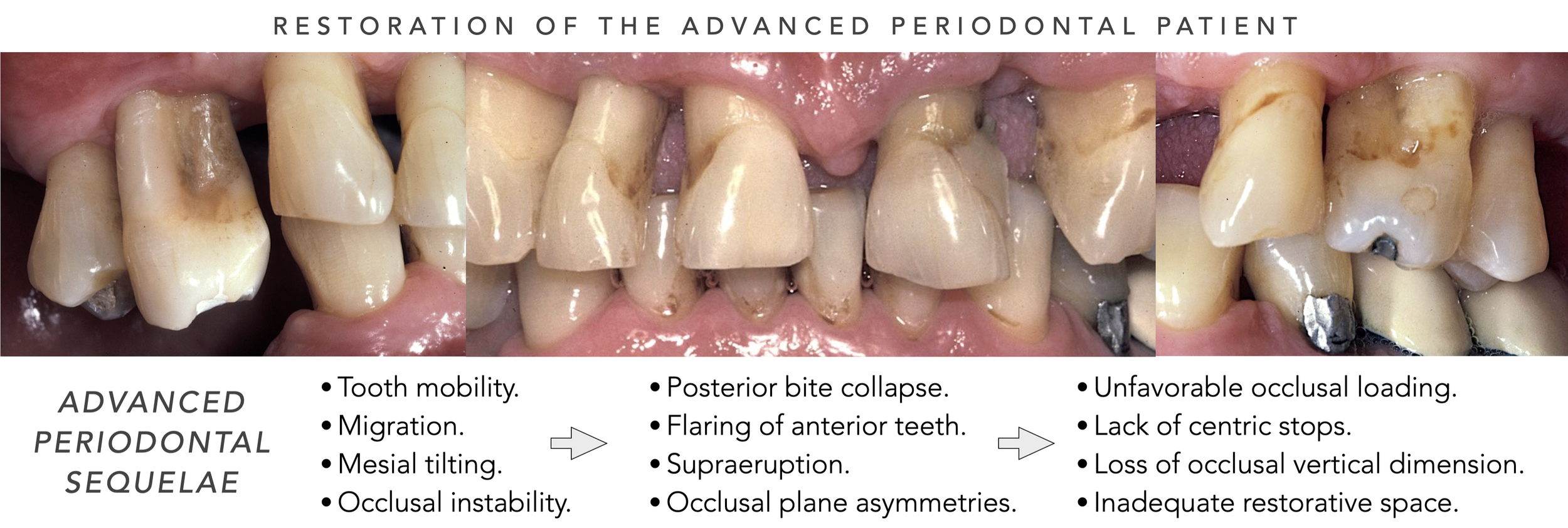
The Key Difference: Coordination vs. Integration
The fundamental distinction between interdisciplinary therapy and periodontal prosthesis lies in the difference between coordination and integration.
Interdisciplinary therapy coordinates treatment among specialists. Each discipline contributes its portion of care, and communication ensures that these contributions align as effectively as possible.
Periodontal Prosthesis integrates all aspects of treatment into a single biologic and biomechanical plan from the outset. Instead of sequentially addressing problems, it designs a comprehensive solution that anticipates long-term stability.
Interdisciplinary therapy organizes treatment. Periodontal Prosthesis engineers outcomes.
A Philosophical Evolution in Dental Care
Interdisciplinary therapy represents collaboration among specialties.
Periodontal Prosthesis represents conceptual integration of biologic and prosthetic principles into a single unified approach.
Both models value collaboration. But Periodontal Prosthesis goes further by dissolving the conceptual boundaries between disciplines and focusing instead on the biologic system as a whole. This shift changes how treatment is planned, executed, and maintained. It moves dentistry beyond simply restoring teeth toward engineering long-term oral health.
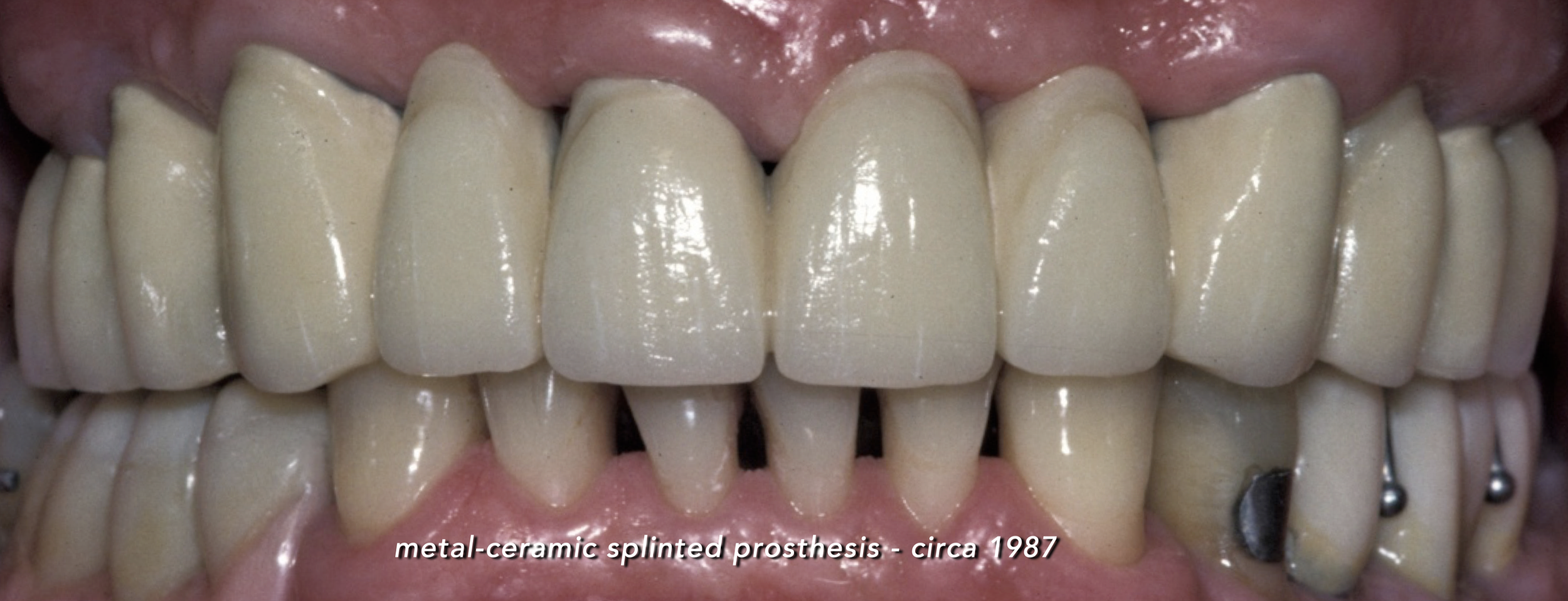
Conclusion
Interdisciplinary therapy and Periodontal Prosthesis share a common goal: improving patient outcomes through comprehensive care. The difference lies in how that care is conceptualized and delivered.
Interdisciplinary therapy coordinates expertise across specialties.
Periodontal Prosthesis integrates biology, biomechanics, and prosthetic design into a unified treatment philosophy focused on long-term stability.
Understanding this distinction is important because it represents more than a difference in technique—it reflects an evolution in how dentistry approaches complex rehabilitation. Ultimately, the future of advanced dental care lies not just in collaboration, but in integration.
In embracing Periodontal Prosthesis, dentistry moves from repairing disease to designing health, and from fragmented care to unified mastery.